News
Where Precision Meets Purpose
Published
Updated
Growing up in Seoul, Silja Kim Bast remembers her glasses all too well - heavy, uncomfortable, and noticeably unstylish. "I wore glasses my whole life and hated them," she laughed. "Back then, you had no choice. They were big, heavy, and unattractive."
Kim Bast didn't set out to join the eyewear industry. She started as a management consultant, moved from Seoul to New York in 2012 for an MBA in finance, and later moved into venture capital where she met a group of optimistic entrepreneurs whose energy was contagious. "They were so hopeful about the future," she recalled. "I thought, maybe I should try building somethina of my own."
Her initial move into eyewear came after Zemma Park, a university connection she had long admired for his innovative approach to retail, encouraged her to start small with something she knew well: glasses. In 2015, Kim Bast launched Spinoza, a brand built around ultra-liahtweiaht frames made from high-tech components.
"American customers were used to heavier acetate frames. Our frames were one-third the weight, and people were blown away by the comfort," she said. Spinoza grew steadily, first with sunglasses, then optical frames sold throuah a network of eye doctors nationwide.
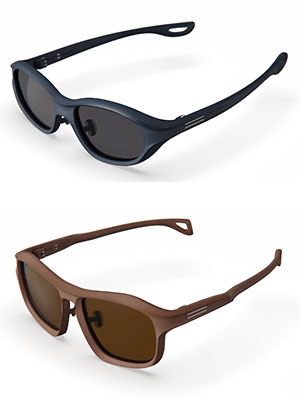
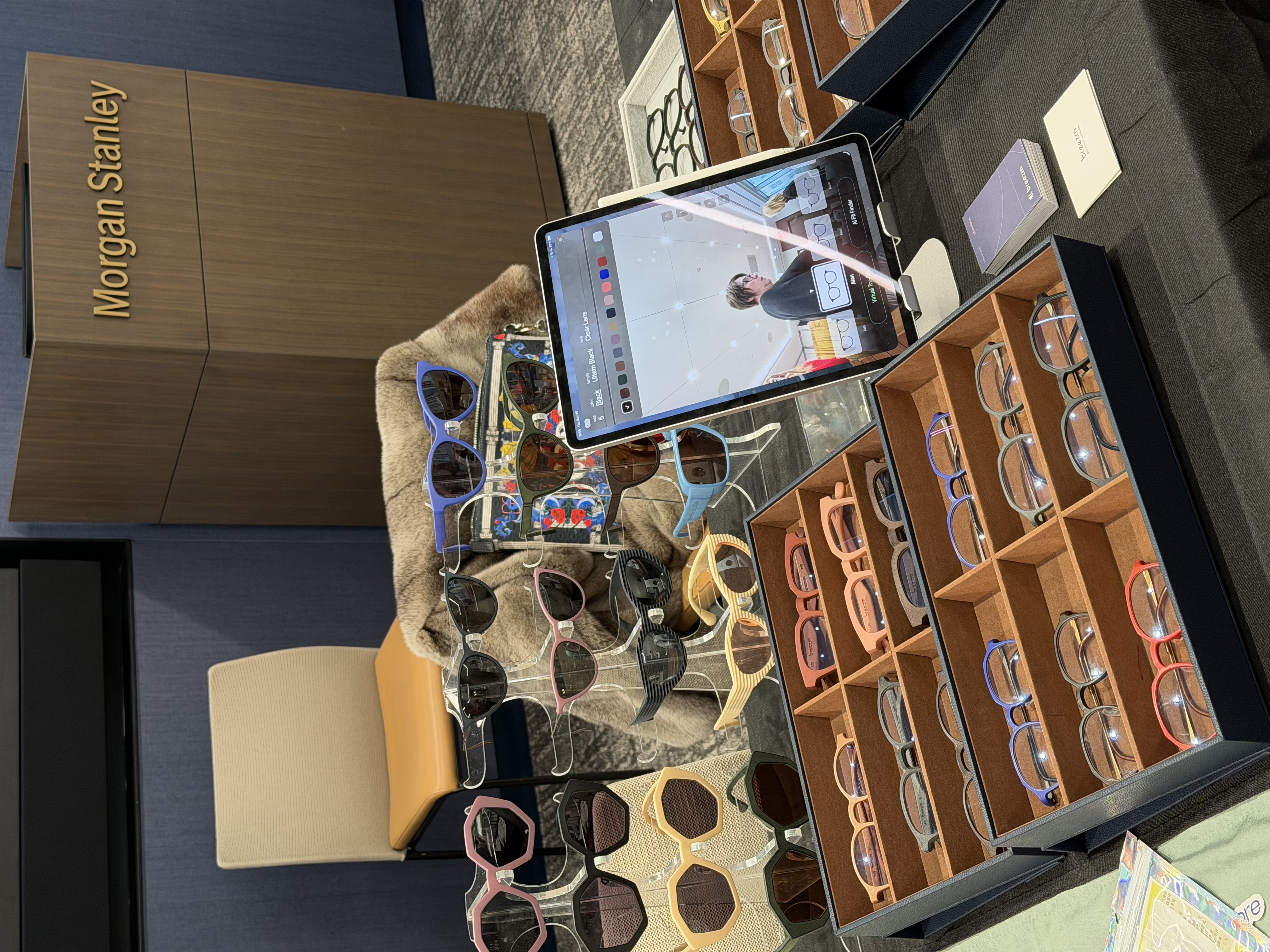
2017, Park - who was also an investor in Spinoza - was in the process of launching Breezm, his own unique collection of eyewear. Park's business model intrigued Kim Bast. It was both highly customizable and uniquely sustainable. By combining industrial-grade 3D printing, precise facial scanning, and Al-driven style recommendations, Breezm was founded on the premise of eyewear on demand. By eliminating excess inventory and producing only what customers actually need, Park had landed on a truly novel approach. "In traditional eyewear, you design, manufacture, and then hope the frames sell," explained Kim Bast, who signed on as Breezm's chief business development officer in 2020. "With Breezm's approach, nothing is produced until it's ordered. It's virtually inventory-free, which saves resources, reduces waste, and dramatically improves the customer experience."
Breezm's process starts with an in-store facial scan that captures detailed measurements of each customer's features. An Al recommendation engine then suggests styles based on facial proportions and past customer preferences, offering a tailored experience that feels both high-tech and deeply personal. "It's like being advised by hundreds of expert opticians at once," Kim Bast added. "The accuracy of the fit is unlike anything else on the market. Seventy percent of customers choose from our top ten recommendations and we are working to refine that accuracy down to the top five. If they want something completely different, they can, of course, choose outside of the top ten recommendations."
The company's commitment to sustainability is as strong as its focus on personalization. Rather than cutting frames from acetate sheets and discarding leftover materials, Breezm uses powder-based 3D printing and reuses excess powder for future production. "We use only about 5% of the resources required by traditional frame-makina." Kim Bast noted. "And because every frame is made to order, there's no surplus. It's more comfortable for customers, but it's also better for the planet."
Additionally, Breezm's production model is ideal for artist collaborations because the time frame from design sketch to one-off sample is significantly shorter than in traditional eyewear manufacturing. "We've already been working with several designers during Fashion Week in both Seoul and New York," she added.
With over IO locations in Korea, Breezm is expanding its presence in the U.S. The brand's flagship store opened in 2024 near Bryant Park, and plans include building out multiple optometrist partnerships while preparing for a second location on the West Coast. Later this year, the brand will also launch a mobile scanning app, allowing customers worldwide to order custom frames from anywhere. "We'll start with our best-tested styles for mobile orders, then expand," she said.
For Kim Bast, Breezm represents the future of eyewear - one that's personal, sustainable, and technologically advanced. "We're not just making glasses that fit," she said. "We're creating a completely new way of thinking about eyewear." And for someone who grew up dreading the weight and discomfort of ill-fitting frames, helping to build a brand that offers custom comfort, style, and purpose feels like more than innovation. It feels like coming full circle.
https://acmagazine.accessoriescouncil.org/eye-fall-2025/page-108