News
A New Way To Buy Custom Eyeglasses For Perfect Bespoke Fit And Style
Published
Updated
It’s a safe guess that none of the A-List Hollywood Stars walking the red carpet at the Academy Awards are wearing off the rack dresses or tuxedos, because they want to look their best. In fashion there has always been a simple and obvious rule: if you want perfect fit, you need a tailor, if you want so-so fit, you can go with pre-made. For those who prefer perfect to just okay, you can also accessorize with custom made to order shoes, bespoke gloves, even umbrellas. But until very recently, millions of Americans had no option when it comes to the one thing they wear every single day—eyeglasses.
This disparity is even more glaring then it sounds when you consider that most of us wear glasses (nearly 200 million Americans including about two thirds of adults) and almost all of us (best estimate is around 98%) have asymmetrical heads, meaning one ear is lower or further from our nose than the other, one eyebrow higher, and so on, making it almost impossible for a normal pair of glasses—which are designed to be perfectly symmetrical—to fit perfectly, even when a skilled optical professional bends and tweaks for improvements. This process is akin to the tailor at the department store adjusting your off the rack suit rather than making it custom to fit you perfectly in the first place.
I have been wearing glasses daily for nearly half a century, along with specialized sunglasses for cycling, ski goggle inserts, scuba masks and so on, and I cannot even guess how many pairs I have owned in my lifetime, but I just got the first pair that fits perfectly, and I love them. I have also gotten more unsolicited “I love your glasses” comments from people in the few weeks since I put them on then in the past few years with multiple off-the-rack pairs—expensive pairs.
If you lived in South Korea it would be a different story, and as a tech savvy consumer you would likely already know how much better the Breezm process is. Breezm is a Korean-launched disruptor in the optics space, with brick and mortar stores across the country using proprietary high-tech measurement and imaging technology to analyze facial structure, offer virtual reality “try on,” and then fabricate precisely bespoke frames, all at very competitive prices. I have previously covered custom suit tailoring, bespoke shoes, and customized sporting goods, and most recently wrote on custom ski boots and did a gift guide here at Forbes on the best customized and personalized gifts.
The company won a prestigious Red Dot Award, one of the highest international honors in product design. Breezm’s model was also selected as a case study to be taught at Harvard Business School (From the Harvard abstract: “The case explores Breezm's strategy for disrupting a traditionally supplier-driven industry by leveraging advanced technology and custom-fit production. The case will be taught this fall as part of HBS's Owner/President Management program. Breezm reimagines the eyewear experience by putting consumers at the center through 3D facial scanning, AI-powered styling tools, and in-house 3D printing—delivering premium personalization at an accessible price point.”)
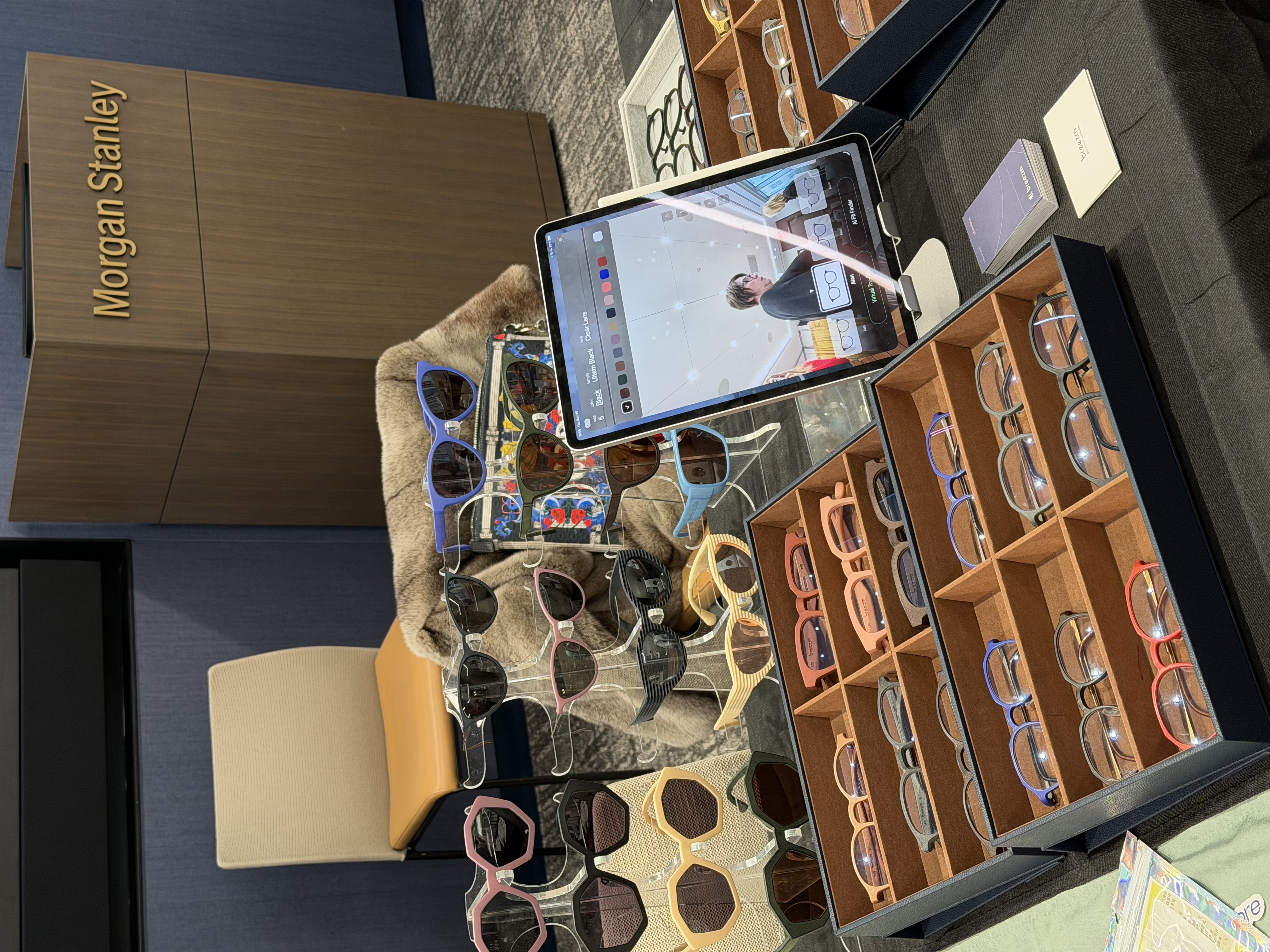
Since early 2024 Breezm has had just one U.S. anchor store, in New York City, where they have built a cult following in the tech, finance and fashion industries, with many customers owning multiple pairs (once you are fitted it is easy to order multiple colors and styles). As Timeout described the Seventh Avenue space near Bryant Park, “There are no walls of generic plastic frames and no endless ‘try this, now try that’ spiral. Instead, the brand leans on a mix of AI and 3D printing to create glasses that actually fit your face—your real one, not the imaginary standard one that most eyewear brands design around.” On Saturdays they have an optometrist on site to offer eye exams if needed.
They will be expanding this retail footprint, most likely next to San Francsico given their customer profile. But the bigger news is that Breezm just launched their DIY custom app for iPhones last month (January 2026), allowing anyone, anywhere in the country, to scan their own face and order bespoke glasses. Depending on the material chosen, which include polymer, wire and titanium, frames are 3D printed or laser cut to order.
If you go in person to the NYC showroom (by appointment only) the process begins with a simplified scan to measure your face and predict which frame styles will fit you best. It also creates a 3D avatar of your face so you can virtually try on different models and see what they look like and swap colors of frames, bridges and arms until you have dialed your choice in.
Then there is a more detailed “deep” scan that precisely measures 16 different factors to optimize fit, comfort and performance, including pupillary distance, face width on either side of your centerline, bridge width, optimal center height for each lens, pantosocpic tilt (optimized angle of the lens relative to your eye for easier vertical eye movement), vertex distance (the optimum distance from pupil to lens, a measurement which for many people wearing regular glasses shockingly results in their eyelashes hitting the lens), temple tilt (both sides), temple spread (both sides), temple length to bend (both sides) and front width. Fortunately, you do not need to understand any of these concepts, but all are explained and diagramed on the personal eyewear report they print out for you.
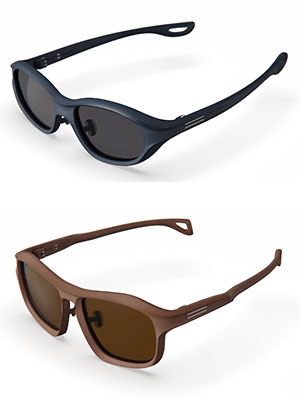
You choose one of many frame styles and materials, each of which comes in multiple color options and many can be further customized with contrasting color arms, choice of nose pad style (or none) and you can even swap the color of the temple for further aesthetic variety. For many frame styles, including mine, they also offer ultra precise fitting clip-on sunglasses. Every frame style comes in 10 different sizes, and to put this in perspective, META’s popular new Ray Ban “smart” glasses offer just two.
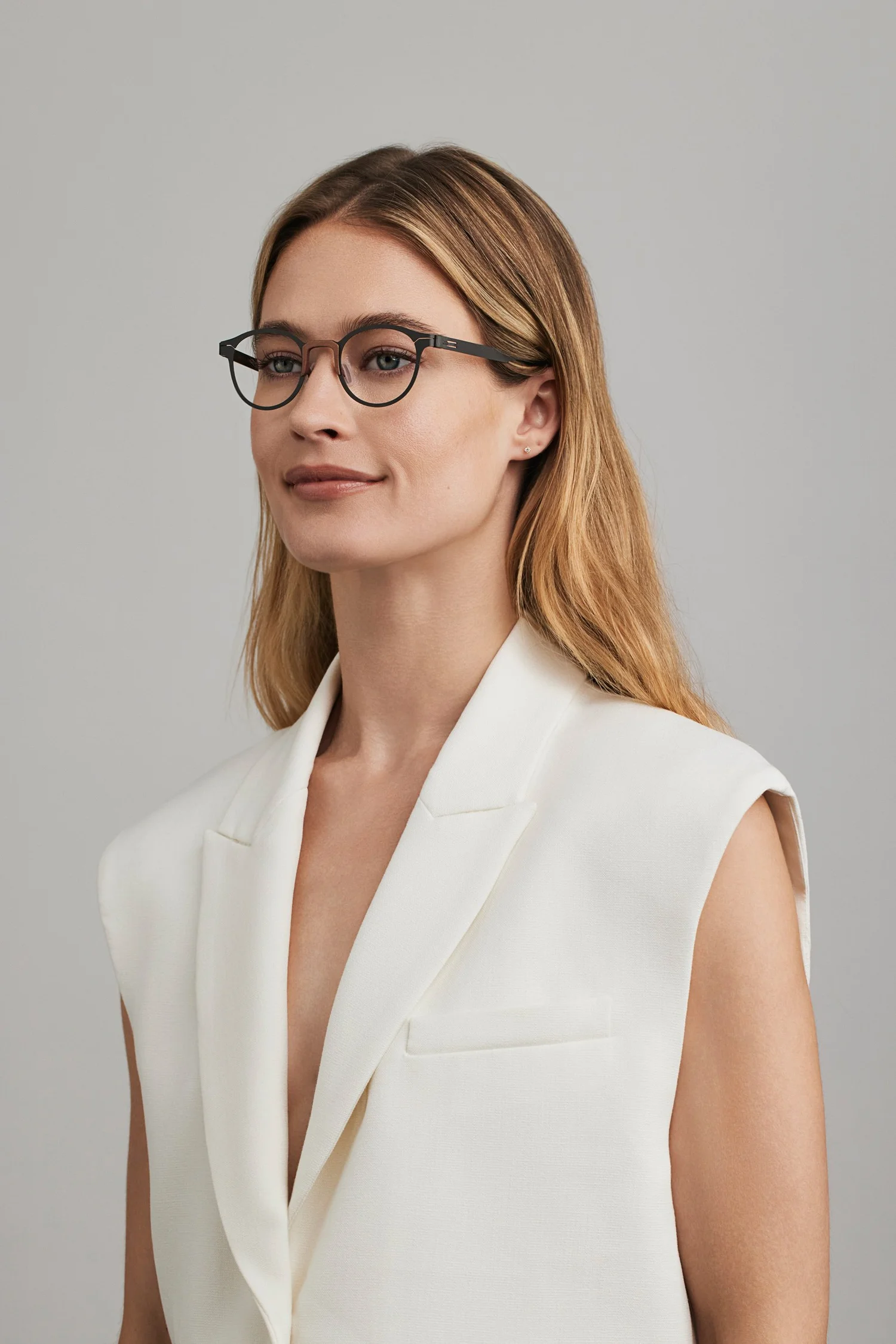
The resulting glasses look better and definitely fit better—if you are one of those people who find yourself regularly pushing your glasses back up your nose, it may be a surprise to find you will never have to do that again. They are also incredibly light. They weighed my existing glasses, which are definitely on the lighter side to begin with, and they clocked at 27 grams, but my new Breezm titanium frames with the same prescription were just 17 grams, featherweight. Heavier glasses are known to cause headaches for some people.
Finally, even the lens buying experience was better, and although they do not make the lenses, they carry the top brands sch as Crizal and Zeiss. I have a powerful progressive prescription, which is a pricey kind of lens, and in the past, most stores have simply said “this would be best for you,” without offering options or choices or even what brand they use. Breezm uses AI to recommend the best option for your prescription and frame and then explains the differences. In addition, for progressive users, pupillary distance is a key measurement, but is often inaccurate, as my fitter explained. “Normally they measure with the frames on with no lenses, so they are lighter and sit higher, but with the lens in it isn’t as precise. We know exactly how every one of our frames will sit so it is exact, and first time progressive wearers often find it easier to adjust.” The in person process takes 45-60 minutes, and now there is the option of using the new app, which I have not tried.
By Larry Olmsted, Senior Contributor.